

Home Organization Products Market Set to Reach USD 21.65 Billion by 2035
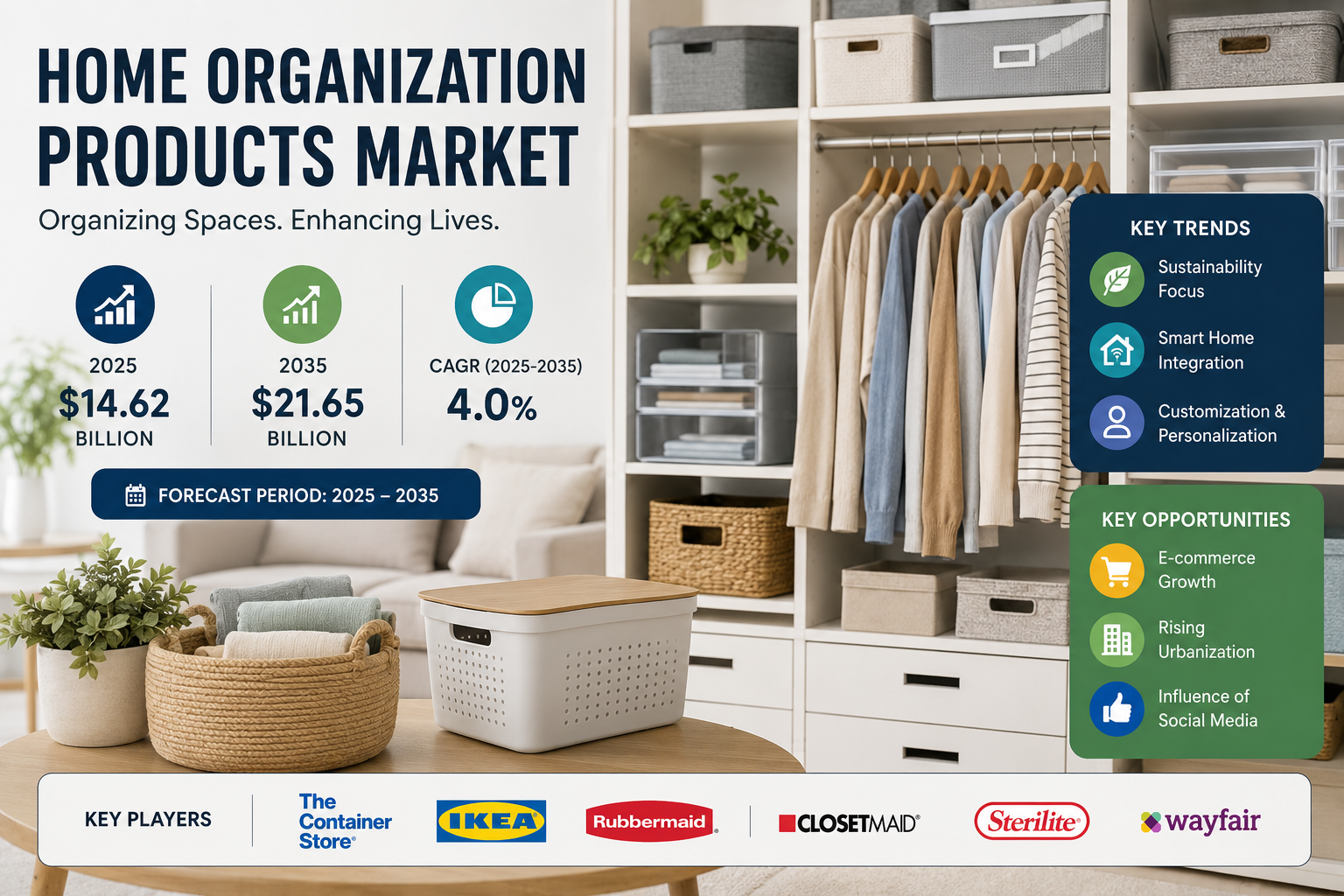
Home Organization Products Market
Driven by sustainability, smart home integration, and e-commerce growth, the market is forecast to expand at a 4.0% CAGR through 2035.
Consumers are increasingly investing in organization solutions that combine functionality, sustainability, and modern design, creating steady long-term opportunities across the global market.”
NEW YORK, NY, UNITED STATES, July 23, 2026 /EINPresswire.com/ -- The global Home Organization Products Market is entering a period of steady and sustained expansion, supported by changing consumer lifestyles, rising demand for efficient living spaces, and growing interest in aesthetically pleasing storage solutions. According to recent market estimates, the industry is valued at USD 14.62 billion in 2025 and is projected to reach USD 21.65 billion by 2035, adding USD 7.03 billion in new market value over the forecast period and expanding at a compound annual growth rate (CAGR) of 4.0% from 2025 to 2035. The market is expected to be nearly 48% larger by 2035 than it is in 2025, reflecting durable demand rather than a short-lived consumer trend. The 2024 market size of USD 14.06 billion also points to a healthy year-over-year rise into 2025, underscoring consistent spending across both essential and premium organization categories.— Market Research Future (MRFR)
As households continue to prioritize functionality, cleanliness, and space optimization, home organization products have evolved from simple utility items into essential components of modern home design. Consumers are no longer purchasing storage baskets, shelving systems, drawer organizers, closet solutions, or modular containers solely to reduce clutter. Increasingly, these products are being chosen to create more efficient routines, support compact urban living, improve interior aesthetics, and complement digital and smart home lifestyles. In many homes, organization has become part of the broader home improvement budget, with buyers seeking coordinated solutions that improve both daily convenience and visual harmony.
The market’s long-term outlook reflects a broader shift in how households define convenience and comfort. The rise of hybrid work arrangements, small-space living, and design-conscious consumer behavior has accelerated demand across product categories such as storage bins, closet systems, under-bed organizers, pantry solutions, wall-mounted shelving, stackable containers, and multi-purpose organizational accessories. These products are now seen as part of a complete home management strategy rather than optional add-ons. Consumers increasingly want products that can serve multiple rooms, adapt to changing routines, and deliver immediate visible impact, especially in spaces such as kitchens, bedrooms, bathrooms, laundry rooms, and home offices.
A key factor behind the market’s growth is the increasing emphasis on sustainability. Consumers are showing stronger interest in products made from recycled, biodegradable, durable, or responsibly sourced materials. This trend is influencing product development across the industry, as brands seek to offer solutions that reduce waste, improve product lifecycle, and align with environmentally conscious purchasing decisions. Sustainability is no longer a niche positioning strategy; it has become a core expectation for many buyers, especially among younger households and design-forward consumers. Shoppers are increasingly comparing material composition, packaging, and durability before making a purchase, which is pushing manufacturers to rethink everything from raw materials to end-of-life recyclability.
Another major driver is the growing integration of smart home concepts into domestic spaces. While home organization products are not always “smart” in the traditional technology sense, the category is increasingly influenced by connected living, space-saving design, and the desire for more intuitive home environments. Consumers are looking for organizational products that fit seamlessly into modern interiors, support digital routines, and pair well with home-office setups, multifunctional rooms, and compact apartments. In this way, home organization has become part of a larger ecosystem centered on efficiency, convenience, and lifestyle optimization. Products that support cable management, device charging, workspace tidiness, and flexible room layouts are gaining traction as households continue to blend living, working, and leisure spaces.
Get Full PDF Sample Copy of Report: (Including Full TOC, List of Tables & Figures, Chart) @ https://www.marketresearchfuture.com/sample_request/21533
Market Overview: From Utility to Lifestyle
The home organization products market has transformed significantly in recent years. What was once considered a purely functional category is now shaped by design trends, social media influence, and aspirational home improvement content. Online platforms, home makeover videos, and interior design communities have helped make organization a visible part of everyday lifestyle branding. Consumers increasingly associate well-organized spaces with productivity, calm, wellness, and personal identity. As a result, organization products are no longer purchased only when a space becomes cluttered; they are often selected proactively as part of a broader home refresh or room redesign.
This shift has expanded demand well beyond traditional storage use cases. Today’s buyers want products that are easy to assemble, visually appealing, space-efficient, modular, and adaptable to changing household needs. In many cases, the purchase decision is driven as much by appearance and flexibility as by capacity or price. Transparent containers, minimalist storage systems, stackable organizers, customizable closet inserts, and multifunctional furniture-storage hybrids have all benefited from this consumer mindset. The strongest-performing products are often those that combine practical utility with a clean, coordinated look that fits seamlessly into modern interiors.
At the same time, urbanization is reshaping product demand. As more people move into apartments, smaller homes, and shared living spaces, the need for efficient use of square footage continues to rise. Compact homes require smarter storage and more thoughtful organization, making the category especially relevant in dense urban markets. Consumers want products that help them maximize every room, every closet, and every shelf without sacrificing style. This has created strong demand for vertical storage, modular systems, and multi-purpose products that can be reconfigured as household needs change over time.
Seasonal behavior also plays an important role in market momentum. Back-to-school periods, spring cleaning cycles, moving seasons, and year-end home refreshes often trigger spikes in demand as consumers look for practical ways to reset their spaces. In addition, the rise of remote and hybrid work has made home organization a year-round priority rather than a once-a-year project. Many households now view organized spaces as essential to productivity, mental clarity, and overall quality of life.
Key Trends Shaping Market Growth
Several major trends are expected to define the home organization products market over the forecast period.
Sustainability Focus: Eco-friendly materials, reusable storage solutions, and products designed for long-term use are becoming increasingly important. Buyers are seeking items that reduce waste and support a more responsible approach to home living. Manufacturers are responding with recyclable plastics, bamboo-based products, natural fibers, and packaging improvements that reinforce sustainability claims. Durable, repairable, and reusable products are gaining favor because they align with both environmental values and cost-conscious purchasing behavior.
Smart Home Integration: As homes become more connected and multifunctional, organization products are adapting to support tech-enabled lifestyles. Consumers want efficient layouts for home offices, charging stations, media storage, and multifunctional spaces. Organization is now part of the modern smart-living experience, where convenience and simplicity matter just as much as technology itself. Products that help manage cords, devices, accessories, and work materials are increasingly relevant in households where digital tools are used throughout the day.
Customization and Personalization: Customers increasingly want organization systems that reflect their individual routines, spaces, and tastes. Modular units, adjustable shelving, customizable drawer inserts, and mix-and-match storage collections are gaining popularity because they allow households to build solutions around their own needs rather than forcing them into one-size-fits-all products. This trend is especially strong among consumers who want room-specific solutions for closets, kitchens, bathrooms, and home offices.
E-Commerce Growth: Online retail remains one of the strongest opportunities in the market. Digital channels make it easier for consumers to compare products, view styling inspiration, read reviews, and purchase entire organizing systems in one place. E-commerce has also expanded the reach of brands into new geographies and household segments, accelerating category visibility and conversion. Online shoppers often prefer curated bundles, room-based collections, and product sets that simplify decision-making and reduce the time needed to plan a home refresh.
Influence of Social Media: Home organization has become highly visible on social platforms, where product aesthetics and “before-and-after” transformations drive demand. Viral content and influencer-led home refresh projects continue to shape consumer preferences, especially for products that are visually attractive, affordable, and easy to install. Social media has helped normalize decluttering as a lifestyle goal, turning organization into a highly shareable and aspirational category.
Urbanization and Space Efficiency: Growing urban populations and smaller living spaces are increasing demand for products that help people do more with less. The need for efficient storage in kitchens, bedrooms, bathrooms, laundry rooms, garages, and home offices is creating consistent demand across product categories. Space-saving solutions that can be stacked, folded, mounted, or reconfigured are particularly attractive to consumers living in compact homes.
Market Opportunities
The home organization products market presents several meaningful opportunities for brands, retailers, and product developers.
E-commerce Expansion: Digital commerce offers a powerful platform for growth, particularly for brands that can combine strong visual merchandising with practical product education. Online shoppers often prefer curated bundles, room-specific solutions, and product sets that simplify decision-making. Brands that invest in content, tutorials, and design inspiration are likely to capture greater share. Product pages that clearly show dimensions, use cases, and room styling examples can significantly improve conversion rates.
Rising Urbanization: As apartment living and compact home layouts become more common, demand for multifunctional and space-saving organization products is expected to rise. Products that can adapt to different room sizes and household configurations will remain highly relevant. This creates opportunities for modular systems, vertical storage, and flexible designs that can move with consumers as they relocate or redesign their homes.
Customization and Premiumization: Consumers are willing to pay more for products that solve specific problems elegantly. This creates room for premium closet systems, modular kitchen storage, personalized office organization, and customizable living space solutions. The premium segment may grow faster than the broader market as consumers seek quality, durability, and visual appeal. Brands that offer elevated materials, refined finishes, and coordinated collections can capture consumers looking for both function and style.
Lifestyle and Wellness Positioning: Organization is increasingly linked with mental clarity, daily routine, and home wellness. Brands that position their products around time-saving, stress-reducing, and clutter-reducing benefits can connect more strongly with consumers looking for practical improvements to everyday life. Messaging that emphasizes calm, control, and ease of use can resonate strongly with households seeking to create more peaceful and productive environments.
Competitive Landscape
The market includes several well-known players that have established strong positions through product breadth, brand recognition, and retail reach. Key companies operating in the market include The Container Store, IKEA, Rubbermaid, ClosetMaid, Sterilite, and Wayfair. These companies continue to shape the market through product innovation, distribution strength, category specialization, and consumer-oriented merchandising.
Competition is expected to intensify as brands focus on design differentiation, sustainable materials, value pricing, and digital retail strategies. The strongest companies will likely be those that can combine functionality with attractive design, while also adapting quickly to changing consumer preferences and home living trends. Partnerships with major e-commerce platforms, investments in direct-to-consumer channels, and expanded use of visual storytelling will remain important competitive levers. Brands that can offer coordinated collections rather than isolated products are likely to stand out in a market where consumers increasingly want complete room solutions.
Large retailers and specialized brands alike are also responding to the growing demand for organized, visually unified home environments. Consumers increasingly expect coordinated systems rather than isolated storage items. This has encouraged the development of full-room solutions, category-based collections, and modular products that allow for flexible installation and future expansion. The ability to offer products that work across multiple rooms and household needs is becoming a key differentiator in both online and offline retail channels.
Segment Outlook
Across the broader market, the strongest growth is expected in categories that support modularity, compact living, and daily convenience. Closet organization products, pantry solutions, kitchen storage items, and multi-purpose household organizers are likely to remain high-demand categories. At the same time, products that support home offices, children’s rooms, laundry areas, and entryway organization will also benefit from changing home use patterns. These segments are especially attractive because they solve visible pain points and often deliver immediate improvements in household efficiency.
Demand is also likely to rise for products that can be reused across multiple spaces. Versatility is a major purchase driver, particularly for consumers living in smaller homes or apartments where every item must serve more than one purpose. Transparent storage, stackable systems, and modular organizers are especially well positioned to benefit from this trend. Consumers value products that make contents easy to see, simplify inventory management, and reduce the likelihood of duplicate purchases.
Material choice will remain an important differentiator. Durable plastics continue to dominate in many practical applications, while wood, metal, woven fiber, and mixed-material products appeal to consumers seeking a more decorative or premium aesthetic. Sustainability will increasingly influence material innovation, packaging, and product lifecycle design. As a result, brands that can balance durability, affordability, and environmental responsibility are likely to gain a competitive edge.
Long-Term Market Outlook
Looking ahead to 2035, the home organization products market is expected to continue evolving from a utility-led category into a lifestyle-driven one. The combination of sustainability, personalization, e-commerce accessibility, and social media influence is reshaping how consumers discover, evaluate, and purchase products for their homes.
The market’s forecast growth to USD 21.65 billion by 2035 reflects more than just rising household spending. It signals a deeper transformation in consumer expectations around home function, visual order, and flexible living. With the market set to add USD 7.03 billion over the forecast period, the category is demonstrating steady, broad-based demand across both mass-market and premium segments. As people spend more time at home and place greater value on comfort and organization, demand for practical and attractive storage solutions is likely to remain resilient.
Manufacturers that can deliver products with strong design appeal, reliable durability, and clear everyday value are positioned to benefit most. Companies that align product development with sustainability goals, digital retail behavior, and modern space constraints will be especially well placed to capture future growth. The most successful brands will likely be those that combine functional problem-solving with a strong lifestyle identity, allowing them to connect with consumers on both practical and emotional levels.
In the years ahead, home organization will continue to play an increasingly central role in household decision-making. Whether the goal is to declutter a kitchen, streamline a closet, improve a workspace, or create a more serene living environment, consumers are expected to keep investing in products that help them organize life more effectively. As a result, the category is poised to remain one of the most relevant and adaptable segments within the broader home goods landscape.
Discover Related Research Reports By Market Research Future:
Textile Home Decor Market
https://www.marketresearchfuture.com/reports/textile-home-decor-market-24239
Luxury Home Fragrance Market
https://www.marketresearchfuture.com/reports/luxury-home-fragrance-market-63645
Home Use Air Purifiers Market
https://www.marketresearchfuture.com/reports/home-use-air-purifiers-market-21384
Sagar Kadam
Market Research Future
+ +1 628-258-0071
email us here
Legal Disclaimer:
EIN Presswire provides this news content "as is" without warranty of any kind. We do not accept any responsibility or liability for the accuracy, content, images, videos, licenses, completeness, legality, or reliability of the information contained in this article. If you have any complaints or copyright issues related to this article, kindly contact the author above.
